Introduction
Nestled in Sri Lanka’s Central Province, Dambulla is a city rich in history and cultural significance. Strategically located at a major junction, it serves as a hub connecting various parts of the island. Dambulla is renowned for its well-preserved cave temples, vibrant markets, and as a focal point within Sri Lanka’s Cultural Triangle. For travelers seeking a blend of spiritual heritage and authentic local experiences, Dambulla offers an array of attractions that cater to diverse interests.
Highlights
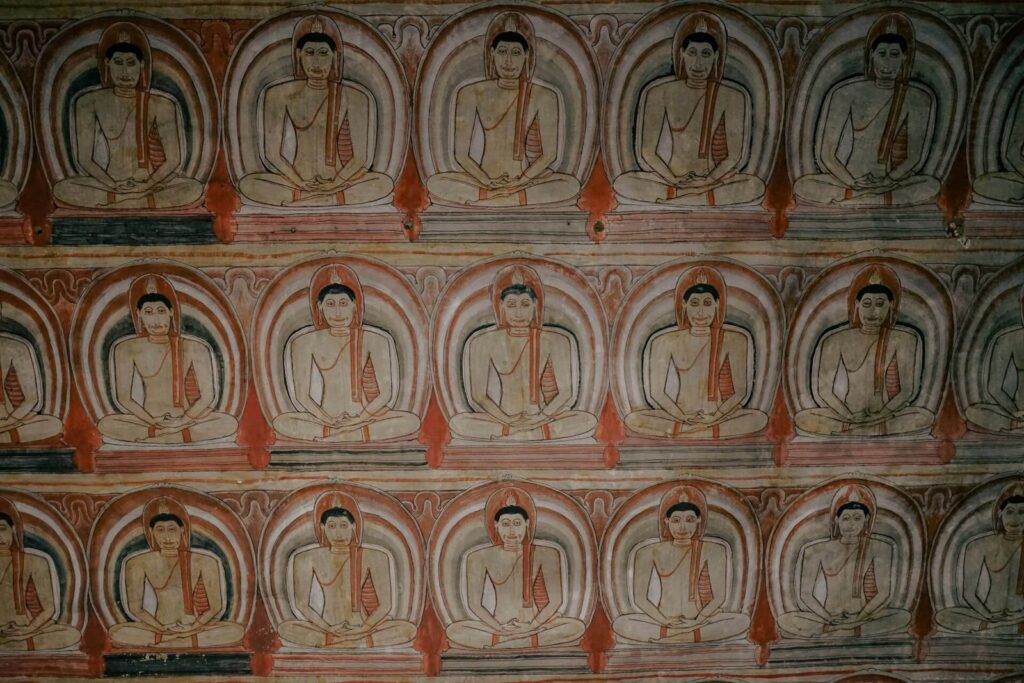
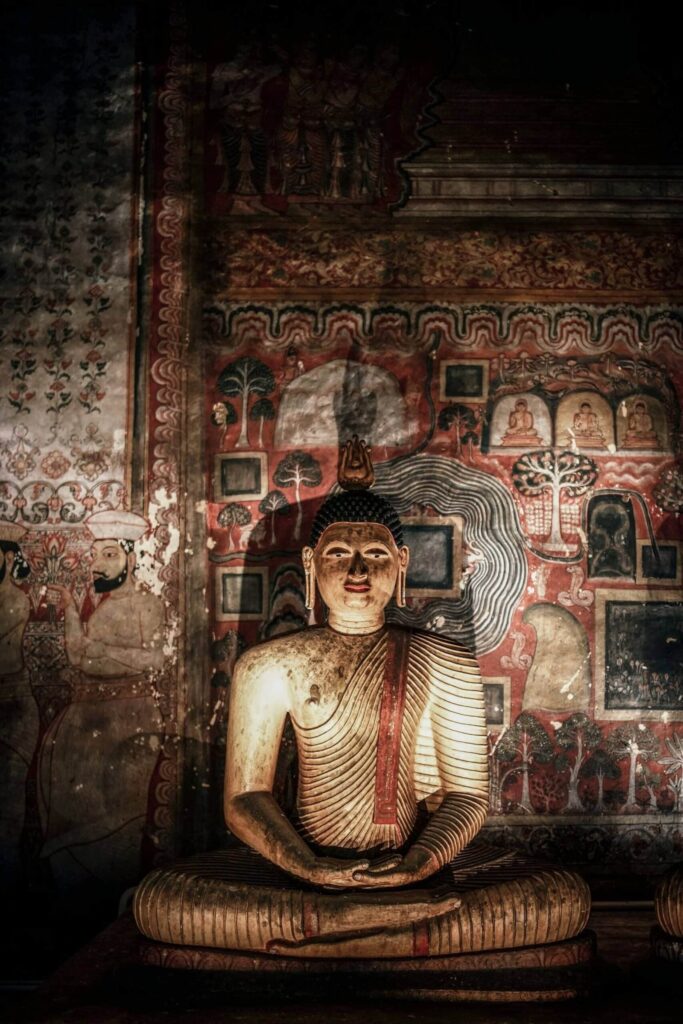
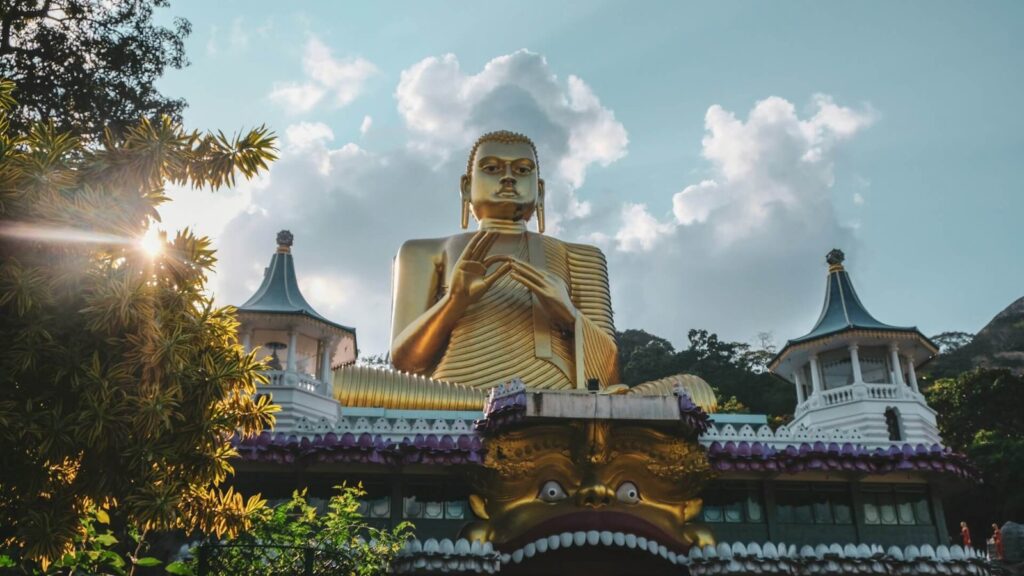
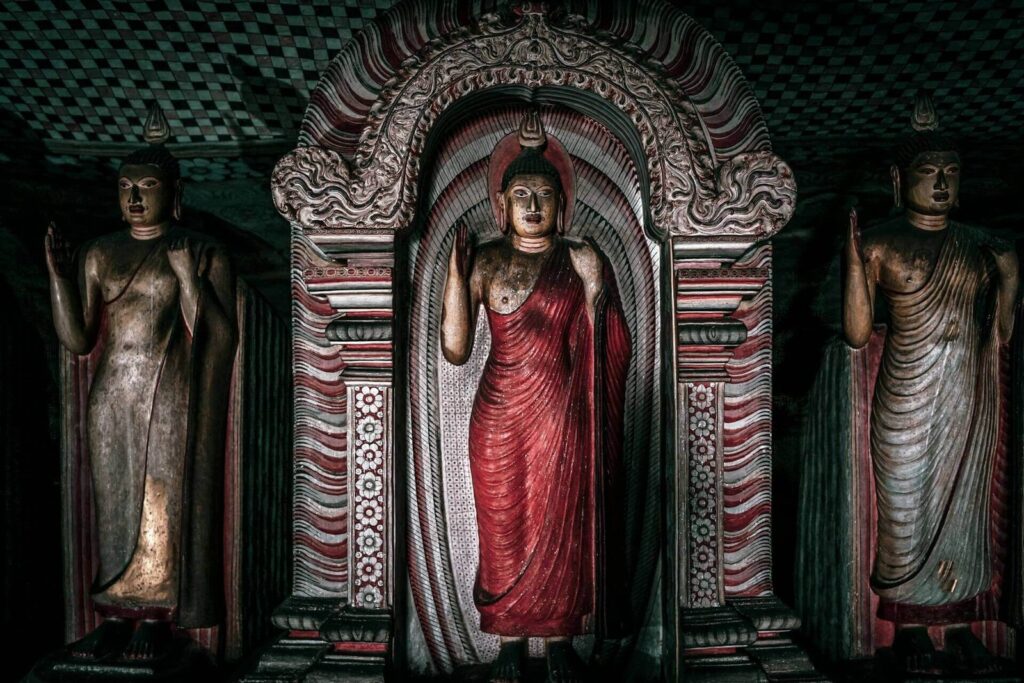
Dambulla Cave Temple: A UNESCO World Heritage site featuring a complex of cave temples adorned with ancient Buddhist murals and statues.
Ibbankatuwa Megalithic Tombs: An archaeological site showcasing prehistoric burial practices, offering insights into early Sri Lankan civilizations.
Proximity to Sigiriya: Close to the iconic Sigiriya Rock Fortress, allowing for convenient exploration of this historic landmark.
Key Attractions
Dambulla Cave Temple (Golden Temple of Dambulla)
Perched atop a 160-meter high rock, the Dambulla Cave Temple complex comprises five caves adorned with over 150 statues of Buddha and intricate murals covering approximately 2,100 square meters. These caves have served as a place of worship for over two millennia, with artworks dating back to the 1st century BCE. Visitors can explore the serene ambiance and marvel at the artistic heritage that reflects the island’s rich Buddhist traditions.
Ibbankatuwa Megalithic Tombs
Located about 3 kilometers from the Dambulla Cave Temple, the Ibbankatuwa burial site dates back to between 750 and 400 BCE. This archaeological site provides a glimpse into prehistoric Sri Lankan society, showcasing burial rituals and societal structures of ancient communities.
Rangiri Dambulla International Stadium
An iconic cricket stadium known for its rapid construction in just 167 days, it offers panoramic views of the surrounding Dambulla region.
Travel Tips
Getting There
Dambulla is approximately 148 kilometers northeast of Colombo and can be reached via the A6 highway. Buses and private taxis are readily available from major cities like Colombo and Kandy.
Accommodation
A range of lodging options is available, from budget guesthouses to mid-range hotels. Staying in Dambulla also provides easy access to nearby attractions like Sigiriya and Polonnaruwa.
Local Etiquette
When visiting religious sites, it’s important to dress modestly, covering shoulders and knees. Removing shoes before entering temples is customary. Additionally, always ask for permission before photographing locals or entering private properties.